
Practical fabrication tips for PVC foam board: cutting with knives, saws and CNC routers, UV printing, gluing, screwing and heat bending.
One of the biggest advantages of PVC foam board is how easy it is to fabricate with ordinary workshop tools. Here are proven tips from the sign and furniture industries.
Cutting
- Thin sheets (1–5 mm): score with a sharp utility knife along a straight edge and snap.
- Thicker sheets: use a circular saw, panel saw or jigsaw with fine-tooth carbide blades.
- CNC routing: single-flute cutters give clean edges and evacuate chips well; ideal for letters and shapes.
- Laser cutting is not recommended: cutting PVC with a laser releases corrosive and harmful gases.
Printing
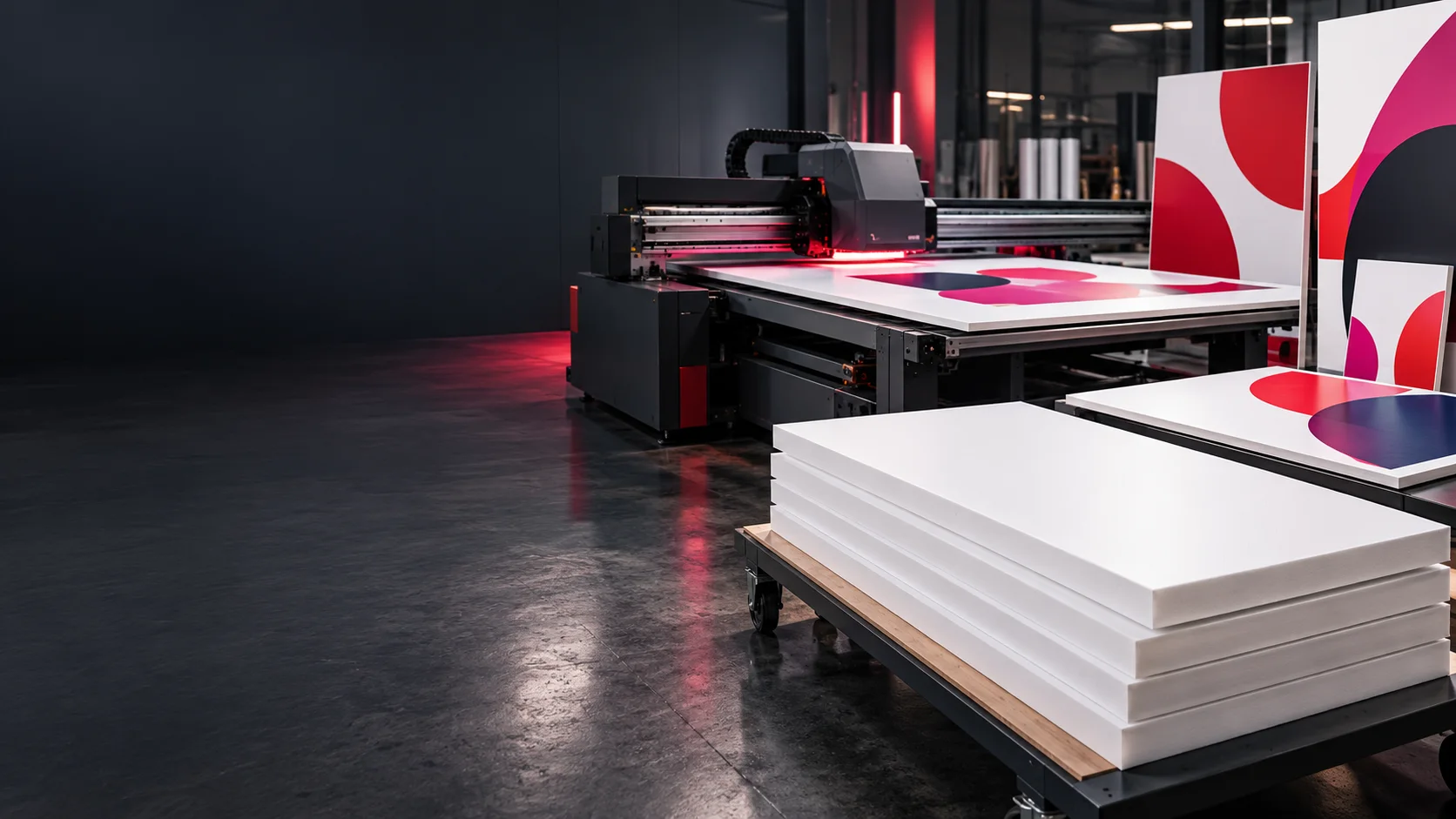
The smooth surface of PVC foam board is excellent for UV flatbed printing, screen printing and self-adhesive vinyl. Clean the surface from dust and grease before printing; for long outdoor life, protect the print with lamination or a clear coat.
Gluing and joining
- PVC solvent cements give strong, welded-like bonds between PVC parts.
- Contact adhesives and suitable PU or cyanoacrylate glues bond PVC to other materials.
- Screws hold better in higher-density boards; pre-drill near edges.
Bending and thermoforming
PVC foam board softens when heated. Using a strip heater or hot-air gun you can make clean bends; larger sheets can be thermoformed in moulds. Test on an offcut first, as the right temperature depends on thickness and density.
Painting
PVC foam board can be painted with acrylic, PU or vinyl-based paints. Light sanding and a suitable primer improve adhesion.