
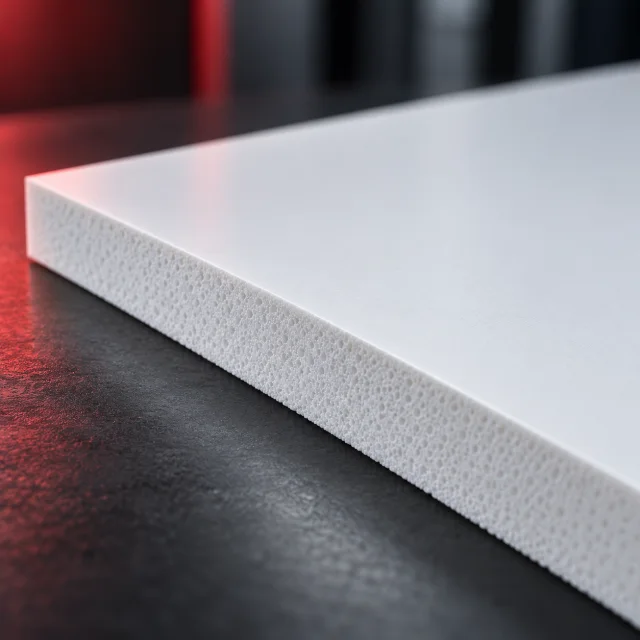
How to choose the right PVC foam board thickness and density for signage, furniture, cabinets and construction — with typical market ranges.
Choosing the right thickness and density is the most important decision when buying PVC foam board. Too thin or too light and the panel will bow; too heavy and you pay for material you do not need.
Typical ranges in the market
The values below are general industry ranges to help you plan. Exact availability for each Toyopan grade is confirmed in our quotation.
| Specification | Typical range |
|---|---|
| Thickness | approx. 1 mm – 30 mm |
| Density | approx. 0.35 – 0.90 g/cm³ |
| Common sign-grade density | approx. 0.45 – 0.60 g/cm³ |
Thickness by application
| Application | Commonly used thickness |
|---|---|
| Printed signs, POP displays, photo mounting | 1 – 5 mm |
| Box letters, routed letters, exhibition panels | 5 – 10 mm |
| Wall cladding, ceilings, partitions | 5 – 12 mm |
| Kitchen & bathroom cabinets, furniture carcasses | 15 – 18 mm |
| Structural panels, door cores, heavy-duty uses | 18 mm and above |
How density changes the board
- Lower density: lighter, cheaper per sheet, easier to cut; best for indoor signs and displays.
- Higher density: harder surface, better screw holding, more impact resistance and rigidity; preferred for furniture, cabinets and outdoor uses.
Tips
- For screws and hinges (cabinets), ask for a higher density board.
- For large-format printing, flatness and surface quality matter more than density.
- Tell us the span, load and environment (indoor/outdoor) — we will suggest the right combination.
Ask for a quotation with your thickness, density and quantity.